
Identifying the causal allele in the CD40 autoimmune locus enables discovery of context-specific trans-effects in B cells
Published in bioRxiv, 2026
Recommended citation: Yoshihiko Tomofuji, Zepeng Mu, Hafsa Mire, Yu Zhao, Cassidy Liu, Vidya Jayanthi, Nicholas Sugiarto, Accelerating Medicines Partnership®: RA/SLE Network, Jeffrey A. Sparks, & Soumya Raychaudhuri†. Identifying the causal allele in the CD40 autoimmune locus enables discovery of context-specific trans-effects in B cells. bioRxiv 2026.07.29.741564 (2026) doi:10.64898/2026.07.29.741564. https://www.biorxiv.org/content/10.64898/2026.07.29.741564v1
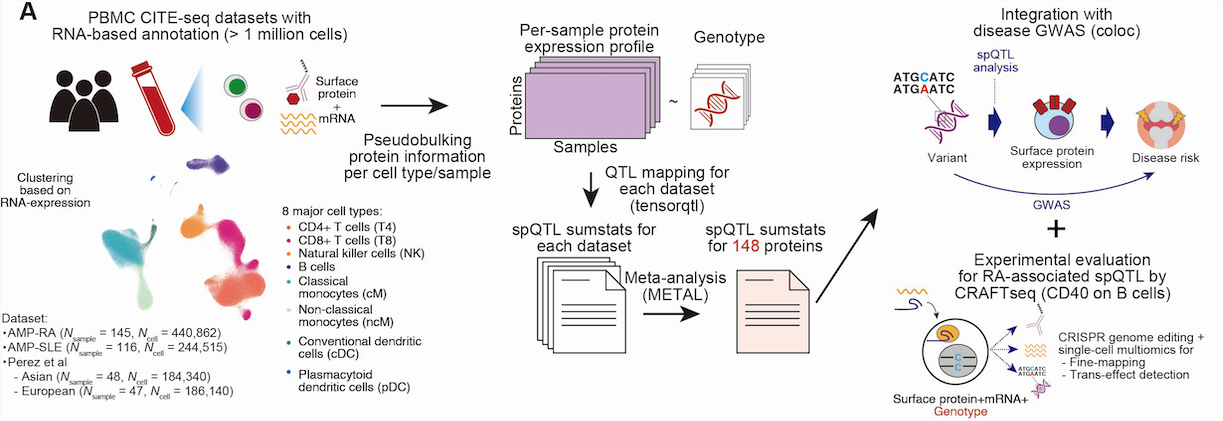
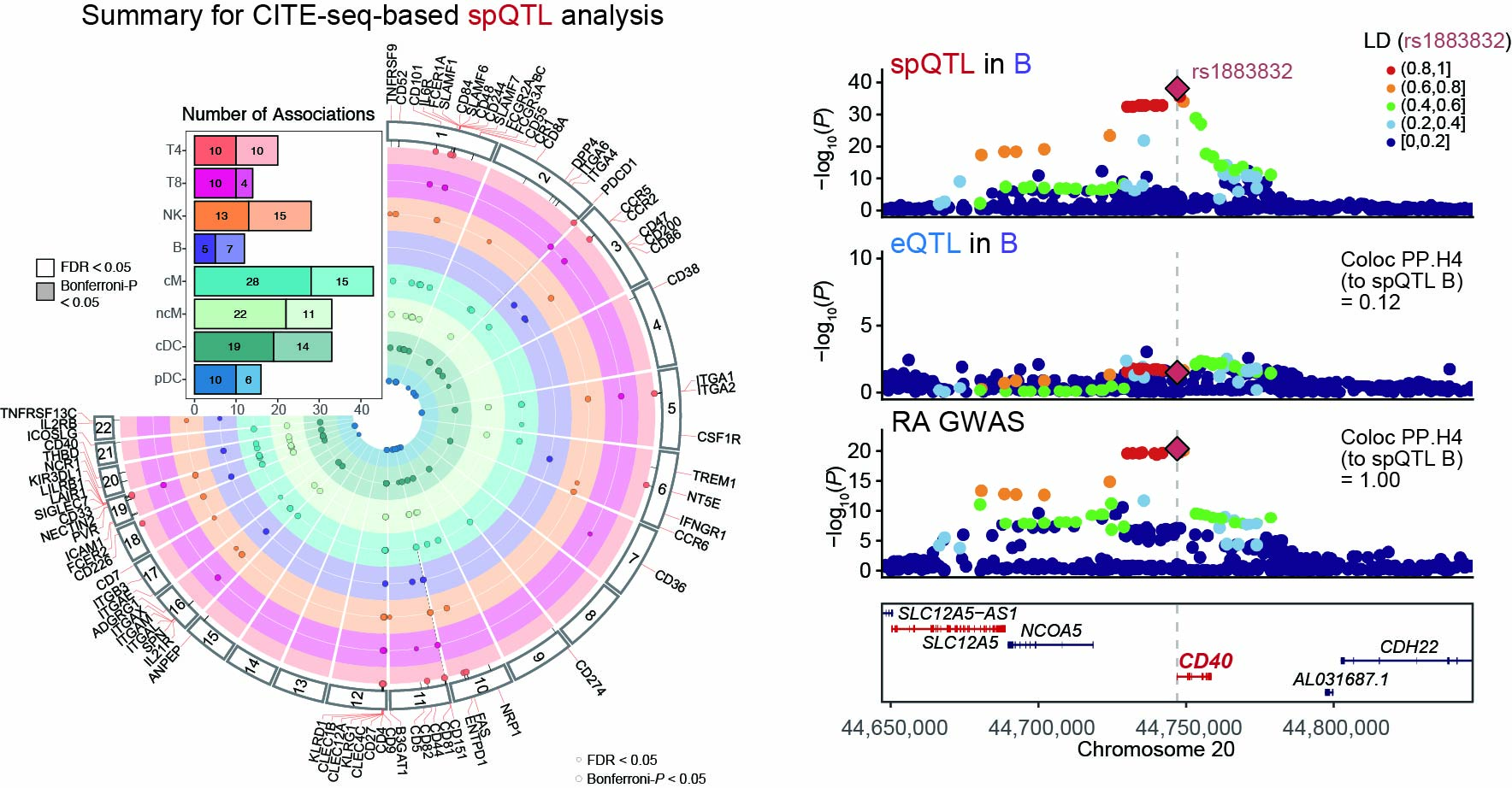
First, leveraging single-cell CITE-seq datasets measuring both mRNA and protein levels, we mapped surface protein quantitative trait loci (spQTLs) across diverse immune cell types. Notably, a B cell spQTL signal at the CD40 locus colocalized with autoimmune disease GWAS signals, demonstrating a robust protein-level association in the absence of a detectable mRNA-level effect.
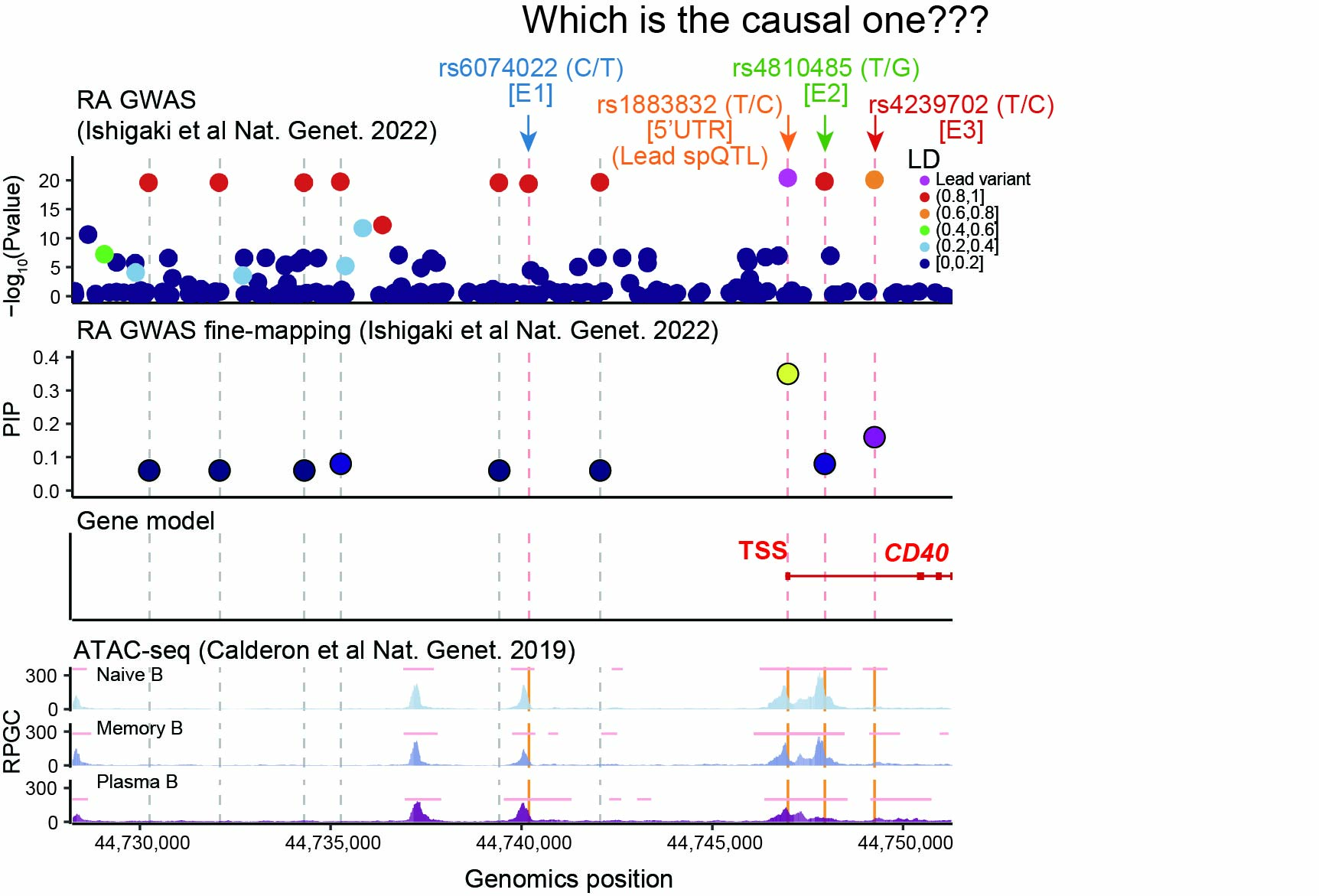
At this locus, ten variants exhibited strong associations in the rheumatoid arthritis GWAS. Even after prioritizing variants that overlap with B-cell cis-regulatory regions or gene bodies, four candidate variants remained. Thus, identifying the true causal variant remained a challenge.
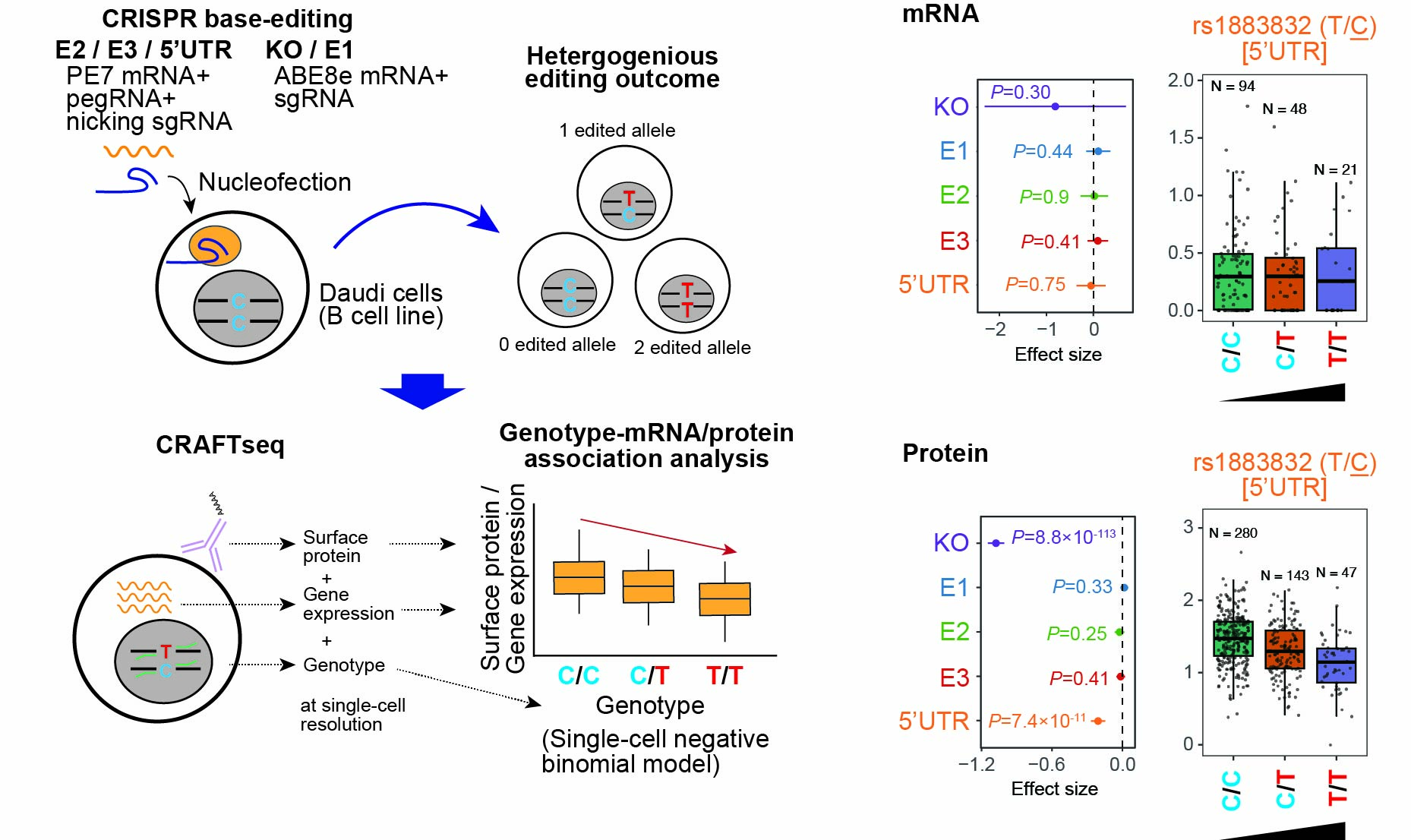
To address this, we leveraged CRAFT-seq, a method recently developed in our study (https://www.nature.com/articles/s41586-025-09313-3). CRAFT-seq enables simultaneous profiling of mRNA, surface protein expression, and target edited genomic regions at single-cell resolution. Using CRISPR base and prime editing, we introduced each candidate variant into a B cell line and performed CRAFT-seq analysis. Among the tested candidates, only a single variant located within the Kozak motif—rs1883832—exhibited a protein-level effect without altering mRNA levels, consistent with our spQTL observations.
Next, we investigated whether these findings extend to primary human cells. By applying CRISPR base editing alongside CRAFT-seq to primary human B cells cultured with CD40L, we successfully confirmed the protein-specific cis-effect. Furthermore, in primary B cells, we observed trans-effects on more than 200 genes specifically in an activated cell state. These affected genes included key rheumatoid arthritis (RA) GWAS risk genes, such as BATF, IRF5, and BLK. By performing CRAFT-seq on B cell lines with and without CD40L stimulation, we demonstrated that these trans-effects are stimulation-dependent—explaining why they are overlooked in large-scale population eQTL meta-analyses of unstimulated B cells. Overall, combining targeted gene editing with single-cell multimodal profiling represents a powerful and versatile approach for detecting context-specific trans-effects.
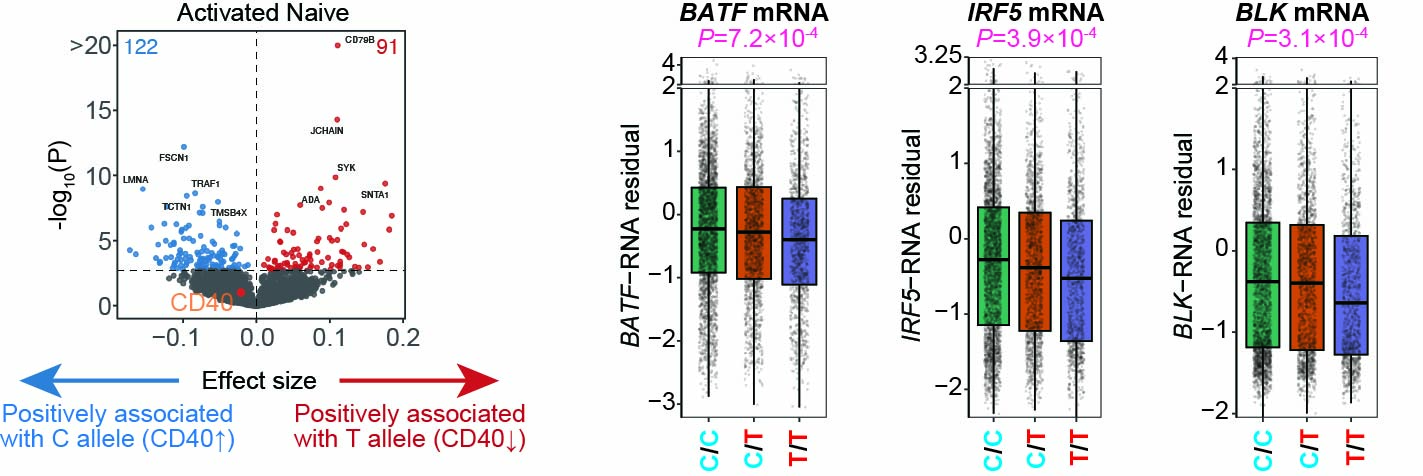
In summary, single-cell CITE-seq-based spQTL mapping identified widespread cell-type-specific signals across immune cell populations. Furthermore, we pinpointed the causal variant, rs1883832, at the CD40 locus using CRAFT-seq. Overall, this experimental fine-mapping framework serves as a powerful strategy to uncover context-dependent trans-effects. Ultimately, the key takeaway from this project is that identifying the precise causal variant is essential for experimentally discovering trans-effects and for elucidating complex disease mechanisms.